Five commitments.
Non-negotiable.
Relevant to Bengaluru, written against Indian standards, and enforced with the same inspection regime as structure. If a client asks us to drop one of the five, we decline the mandate.

Bengaluru’s real constraint
Water
BWSSB supplies around 900 million litres a day against a demand near 1.5 billion, with the gap filled by more than 1,700 tankers. Tanker prices doubled in the 2024 crisis, and families in peripheral areas were paying ₹3,000 to 5,000 a month for water.
We design to the statutory recharge capacity as a floor, not a target: roof and paved-area catchment sized properly, recharge into the aquifer rather than into the drain, dual piping so treated water and rainwater carry the non-potable load, and storage that holds through March. The Board’s own position is that harvested rainwater is suitable for everything except drinking. A house that uses it that way is meaningfully independent of the tanker market.

Envelope first, equipment second
Energy
India’s buildings consume roughly 38% of primary energy and 31% of its electricity. Most of that is decided at design stage and cannot be fixed later.
Eco Niwas Samhita sets minimum envelope performance for residential buildings, limiting heat gain and ensuring adequate natural ventilation and daylight, and applies to plots of 500 m² and above. Commercial work runs to ECBC, tiered at roughly 25%, 35% and 50% energy savings. We specify to the envelope standard before anyone sizes a chiller, because orientation, shading and glazing are free at drawing stage and impossible afterwards.

The carbon is in the binder, not the palette
Materials
In a concrete mix, cement is ten to twenty percent of the mass and seventy-five to ninety percent of the carbon. The cladding, the stone, the timber, the brass barely move the number.
So the decision that matters is a mix design taken in the first six months, in a document nobody outside the site will ever read. It is not a restriction on your palette. It is what makes your palette free.
Blended binders cut embodied carbon by twenty-five to forty-five percent. What they cost is cure time, and we tell you that before you commit to a programme. Then we build whatever you specified above it, without argument.
Where the rules are least enforced
Waste and site
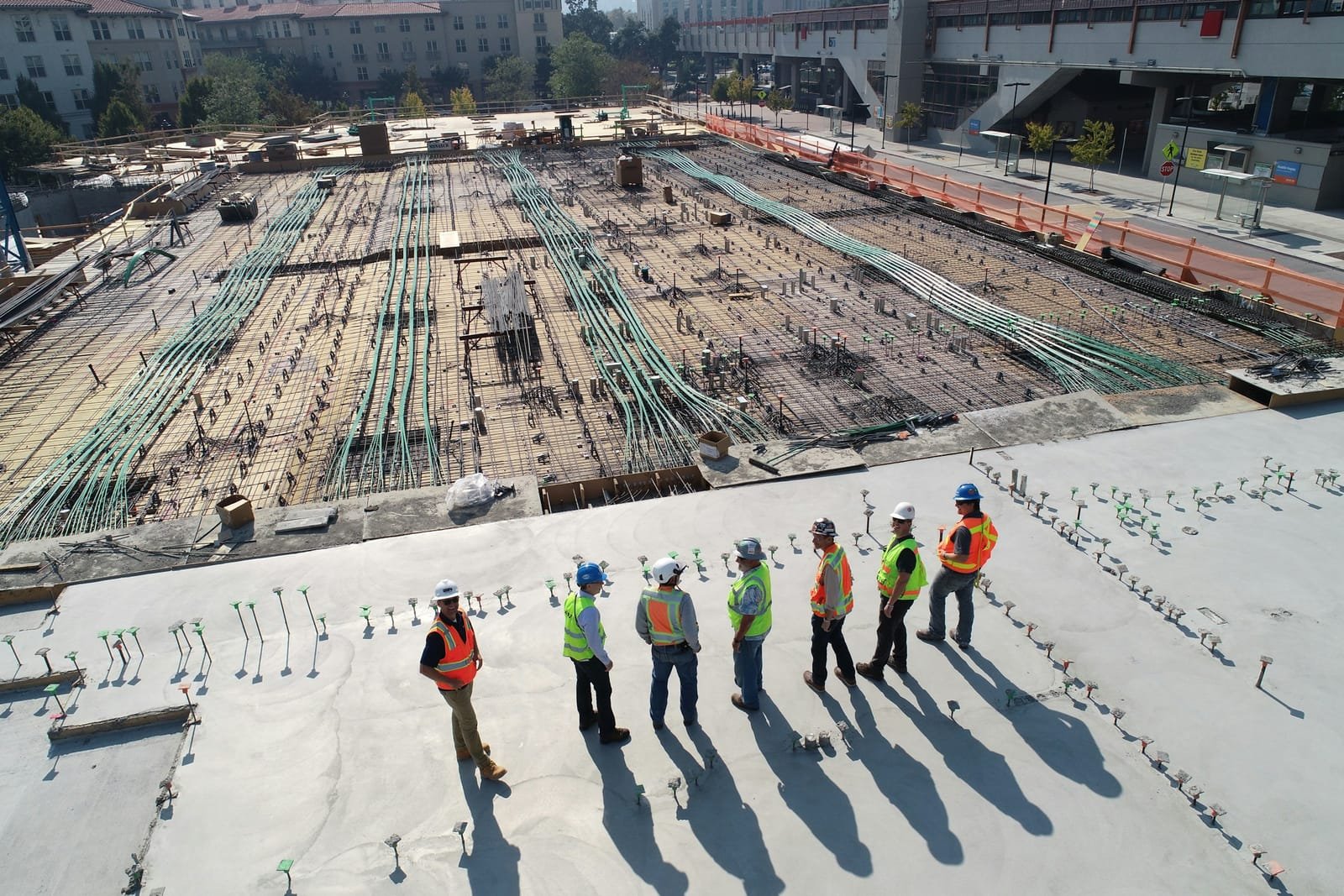
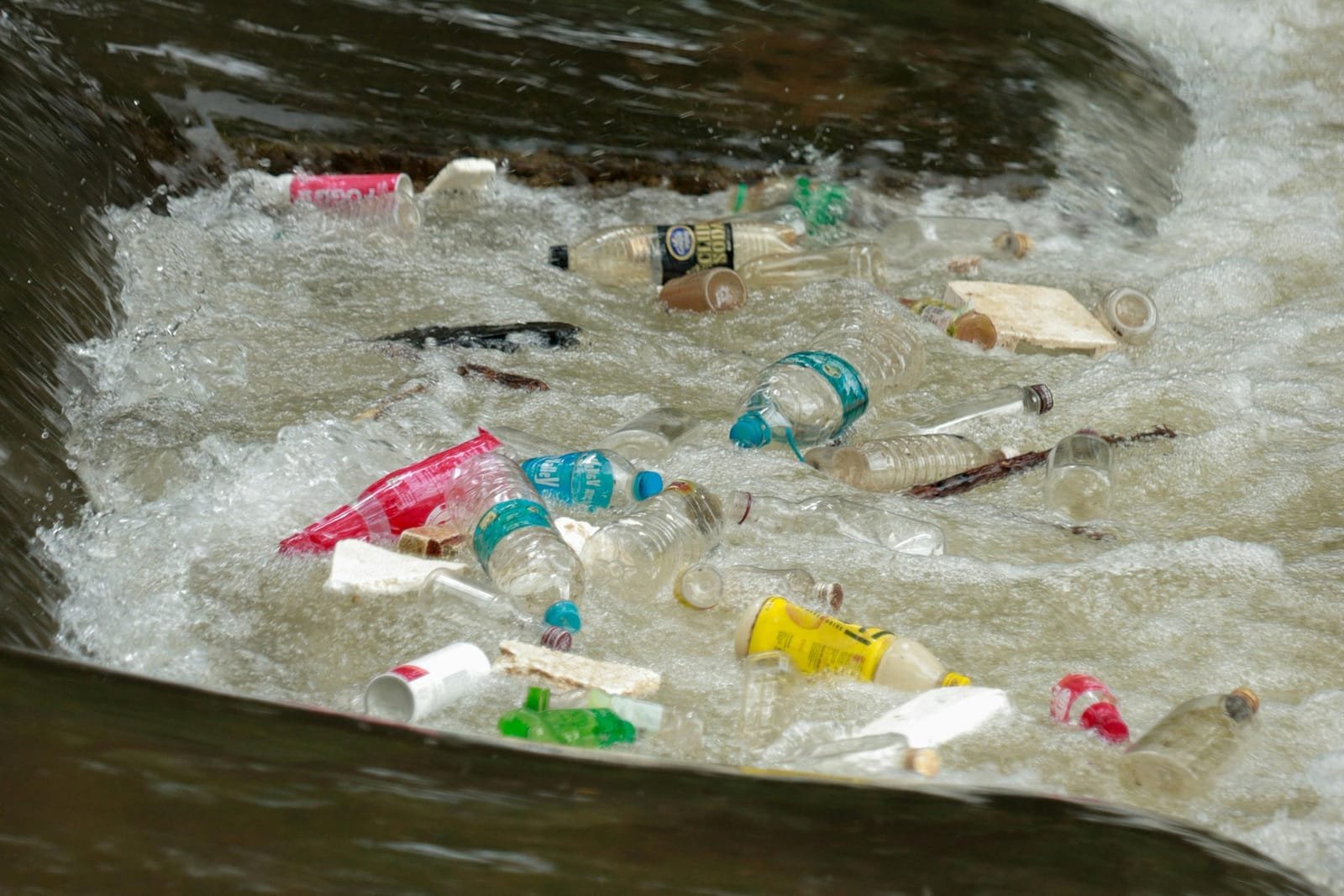
Under the 2016 rules, projects generating more than 20 tonnes a day or 300 tonnes a month must separate waste into streams, concrete, soil, steel, wood and plastics, brick and mortar, and get a waste management plan approved before work begins.
We run this from day one regardless of whether a project crosses the threshold, alongside topsoil recovery, tree protection and dust control.

Who is answerable
Governance
Certification is evidence, not the objective. IGBC final awards depend on site verification of what was actually built, not on what was promised at design stage, which is the only part of certification we consider meaningful. From 1 May 2026 all new IGBC applications run under Version 4.0.
GRIHA, developed by TERI with the Ministry of New and Renewable Energy, is mandatory for central government buildings and is the route we take on public work.
How it is implemented.
Not retrofitted at certification stage. Enforced like structure.
Mixes, water balance, envelope performance, retention and phasing enter the specification before the first drawing is priced.
A contractor who has not priced for a commitment will not deliver it. Every tender is checked before award. Gaps are raised in writing, not discovered on site.
Waste segregation, water operation, topsoil recovery and protection sit in the same inspection and test plans as structure, with the same hold points.
Progress sits in the same weekly pack as cost and programme, owned by the principals, audited annually.
If a client asks us to drop one of the five, we decline the mandate. That is what makes them commitments rather than options.
The cost of building badly is not paid by the builder.
It is paid by the water table, the air and the coastline, for decades after the site hoarding comes down.


Every commitment above is a line in an inspection and test plan, checked on site with the same hold points as the structure. A commitment nobody verifies is a slogan.