
Connect with us
About

We take few mandates.
Attention does not scale.

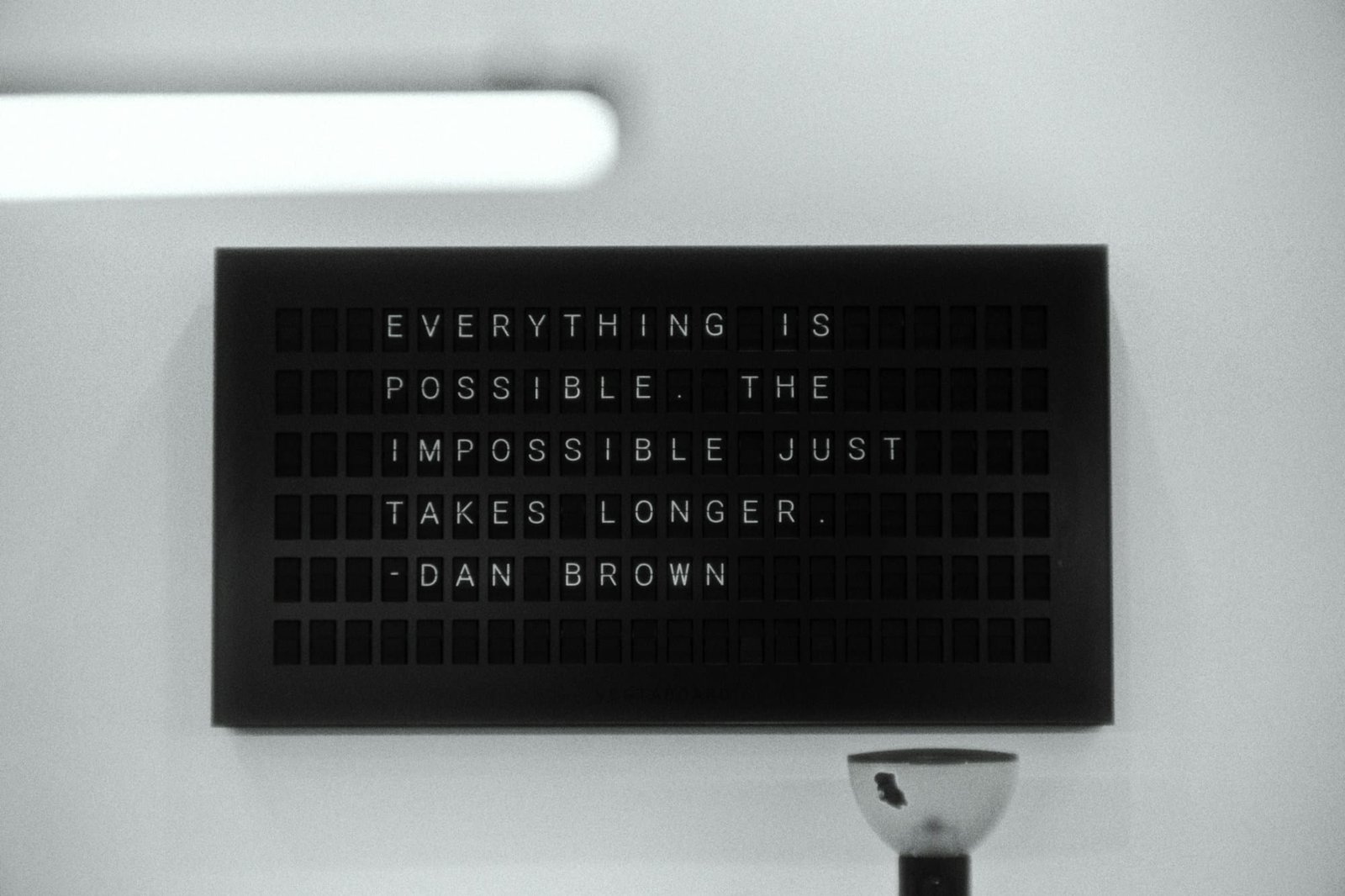
A letterboard sign reading everything is possible, the impossible just takes longer

Building a fine home has become a procurement exercise. We think that is backwards.

A list of expensive things, bought in the right quantities, installed by whoever was free that month.

Money buys material. It cannot buy judgement: where a wall should stop, how light enters a room in April, why a door should feel heavier than it needs to. Those decisions are the house. The rest is shopping.

Judgement is not a temperament. It is a set of habits, and most of them are unglamorous. We draw every detail at shop-drawing level before anything is cut. We build the difficult ones at full size and look at them before we commit. When something cannot be built the way it was drawn, the architect hears it before we build it, never after, and never as a substitution nobody mentioned.

None of those habits is difficult. Not one of them requires talent, or money, or equipment nobody else has. They require somebody to decide that the drawing is worth defending on a Tuesday afternoon in the ninth month, when the client is not on site, the architect is in another meeting, and the easier answer is available and nobody would ever know.

The result is a house that is simple, private, and right to the last detail. One that runs itself, so you never become the project manager of your own home.

Why We Care This Much About A House

Because the habits are the same at every scale, and India’s problem has never been the drawing.

We have the architects. We have the engineers. We have the codes, IS 456, the National Building Code, ECBC, and most of them are competently written. What fails is the eight months between the drawing and the building, and it fails the same way on a house as on a hospital: nobody wrote the tolerance down, nobody checked it, and by the time anyone could have, it was covered.

The scale of that failure is easy to miss, because it never announces itself. Nothing collapses. There is no headline. There is only a city of buildings that are each ten or fifteen percent worse than they were designed to be, ageing faster than they should, costing more to run than they need to, and quietly teaching everyone who lives in them that this is simply how building works here.

It is not how building works here. It is how building works when nobody writes the number down.

We believe that gap is the single largest constraint on how India builds, and that it is a discipline problem rather than a money problem. Countries that build well are not the ones with the largest budgets. They are the ones where the buried work is inspected.

So we are starting where a firm our size can actually prove it. One house at a time, with the standard published and the record handed over. If that discipline is worth anything, it will show up in the buildings long before it shows up in anything we say about ourselves.

The Founders

Two principals. Both on your project.

The people you meet in the first conversation are the people answerable at handover.

Shiva Kumar, co-founder

Shiva Kumar

Co-founder · Management

I believe complexity is what holds people back. Not ability.

I have watched it my whole working life. People who could have built something remarkable stopped at the door because someone made the door hard to open. Nobody meant to keep them out. The complexity just sat there and the opportunity walked away.

The best people I have met, and the best countries I have seen, all did the same thing. They made it easy. Education, infrastructure, health, it never mattered which. They took what was hard and left it simpler than they found it, and the people who came after them went further than they ever could have alone.

That is the work I have chosen. I started out designing homes, then moved into construction so I could own the process from floor plan to finished space. Now I am building an adaptive tutoring system for students. Two different materials, one job: take something hard and make it simple enough that more people can do it.

Simplicity is not the easy path. It is the excellent one. Any fool can make something complex; it takes a genius to make it simple, which happens to be excellent. That standard is the only one I hold myself to, and I am still chasing it.


Gowri Nagaraj, co-founder

Gowri Nagaraj

Co-founder · Design Head

Infrastructure should be made simple for a nation like ours.

Singapore and Switzerland are successful through their ability to make things simple, living alongside nature rather than against it.

I started out designing homes, sitting with families, learning how they actually live, and shaping the space around that. A window placed where the morning finds it. A room that holds a family the way that family actually gathers.

But a drawing is only a promise. Handing it off and hoping it survived the site was never enough for me. So I moved into construction and took ownership of the whole arc, floor plan to finished space, nothing lost in between.

That is the standard I hold myself to: spaces built as carefully as they are designed. The detail you would never notice is the one I spent the longest on, because that is what separates a space that works from one that is merely finished.

What I am building toward now is carrying that same attention into commercial work through biomorphic design. Environments shaped by curve and light rather than grids. Places that do not feel like buildings so much as living things you happen to be standing inside.

How We Are Built

Principals on every mandate, records on every decision.

01
Founder-run
The people you meet in the first conversation are the people answerable at handover.
02
Fixed mandate count
A set number of projects each year. When the year is full, we say so and hold the next slot.
03
Written everything
Decisions, substitutions, releases and closures live on paper. The building outlives the relationship, and so do its records.
A framed print reading excellence is an attitude

Excellence is an attitude.

Not a finish, not a price band. It is whether the person on site at four in the afternoon, with nobody watching, does the thing properly. That is the only place a standard actually lives.

Read the philosophy →